Showing posts with label Deepen. Show all posts

Monday, 4 December 2017

ANDREA PIRLO(FORMER CAPTAIN OF ITALY)


Andrea Pirlo, born on  19 May 1979 is an Italian retired professional footballer. Pirlo was usually deployed as a deep-lying playmaker in midfield for both his club and national sides and he is widely regarded as one of the greatest ever exponents of this position due to his vision, ball control, creativity and passing ability, as well as for being a free-kick specialist.

At international level, Pirlo is the fifth-most capped player in the history of the Italian national team with 116 caps between 2002 and 2015. He played for the Italian youth teams at U15, U18 and U21 level, captaining and leading the latter to victory in the 2000 UEFA European Under-21 Championship as the Golden Player and Top Scorer of the tournament. He joined the Italian senior side in September 2002 and captained the Olympic team to a bronze medal in the 2004 Olympics. Later, he was instrumental in their victory in the 2006 FIFA World Cup. He was named Man of the Match three times, including the final, more than any other player in the tournament, and ultimately won the Bronze Ball (awarded to the third best player of the tournament) also being elected to the Team of the Tournament.


Pirlo is a silent leader. He speaks with his feet. — Marcello Lippi.This show Pirlo is a captain with good leadership skills. As a playmaker, he is highly regarded by pundits for his outstanding vision, awareness, and football intelligence, as well as his movement, inventive play, anticipation, ability to read the game, and his wide range of distribution, which enabled him to play the ball first time and rarely relinquish possession, even when put under pressure; in addition to being capable of playing precise, short exchanges to teammates, he was also known for frequently attempting riskier and more difficult passes and is renowned in particular for his extremely accurate long-range passing, both on the ground or in the air, with either foot, despite being naturally right footed.

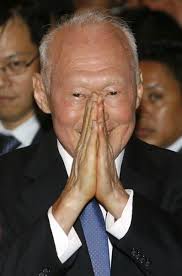
LEE KUAN YEW(FOUNDING FATHER OF MODERN SINGAPORE)


 Lee Kuan Yew, the first Prime Minister of the Republic of Singapore, is regarded as the founding father of modern Singapore. Lee Kuan Yew was born on 16 September 1923, to Lee Chin Koon and Chua Jim Neo. He studied at the prestigious Raffles Institution, and stood first in Singapore and Malaysia in the Senior Cambridge exams. Awarded an Anderson Scholarship to Raffles College, he studied there between 1940 and 1942.

His dream of making Singapore a part of the Federation of Malaysia was shattered. Continuing as the Prime Minister of the new republic, he was beset with numerous problems that mainly stemmed from the nation's limited natural resources. Though he adopted the policies of non-alignment and neutrality for Singapore, he did not take his country’s independence for granted. Apart from strengthening its military might, he brought in conscription. He encouraged foreign investment, developed the necessary infrastructure, ensured racial harmony, and eliminated corruption. During his three decades as Prime Minister, Singapore achieved a per capita income next only to Japan's in East Asia, and emerged as a chief financial hub in the region. He is responsible for grooming the people of Singapore as the most disciplined and hard working people in the world. Though widely admired, his autocratic methods invited criticism. He did not tolerate dissent from political opponents and the media.


In 1961, the Economic Development Board was established. It succeeded in industrializing Singapore by drawing foreign investment through tax incentive, providing highly skilled and cheap manpower, and modern transport systems and communication network.Between 1965 and 1985, Singapore’s economy developed eightfold and its per capita income improved fourfold. The percentage of families living in poverty reduced to 0.3%. Homelessness and unemployment were completely stamped out.

ABDUL KALAM ( THE GREAT SCIENTIST)


 A.P.J. Abdul Kalam was a prominent Indian scientist who served as the 11th President of India from 2002 to 2007. Renowned for his pivotal role in the nation’s civilian space programme and military missile development, he was known as the Missile Man of India. He made significant contributions to India's Pokhran-II nuclear tests in 1998 which established him as a national hero. An alumnus of the prestigious Madras Institute of Technology, Kalam began his career as a scientist at the Aeronautical Development Establishment of the Defence Research and Development Organization (DRDO).

He was later transferred to the Indian Space Research Organisation (ISRO) where he served as the project director of India's first Satellite Launch Vehicle (SLV-III). He eventually rejoined DRDO and became closely involved in India’s space programme. he served as the Chief Scientific Adviser to the Prime Minister in the 1990s before becoming the President of India in 2002. Immensely popular during his term, he earned the moniker of People's President. He was honored with several awards including the Bharat Ratna, India's highest civilian honour, for his contribution to the nation’s space and nuclear programme.


A.P.J. Abdul Kalam earned his degree from Madras Institute of Technology in 1957 and joined the Aeronautical Development Establishment of the Defence Research and Development Organisation (DRDO) as a scientist in 1958.

In the early 1960s, he worked with the Indian National Committee for Space Research (INCOSPAR) under the renowned space scientist Vikram Sarabhai. He also designed a small hovercraft at DRDO.
He visited NASA's Langley Research Center in Hampton, Virginia; Goddard Space Flight Center in Greenbelt, Maryland; and Wallops Flight Facility in 1963-64. Inspired by this visit, he began working on an expandable rocket project independently at DRDO in 1965.

THE LEADERSHIPS QUALITIES SHOWN BY HIM ARE:
1)   Cooperation
2)   Strategic Planning
3)   Vision
4)   Be decisive

CAPTAIN WAYNE ROONEY


Wayne Mark Rooney  born 24 October 1985 is an English professional footballer who plays for Premier League club Everton. He has played much of his career as a forward, and he has also been used in various midfield roles. He is the record goalscorer for the England national team and for Manchester United. Rooney made his senior international debut for England in February 2003 aged 17, becoming the youngest player to represent England and he is England's youngest ever goalscorer.


After the departure of Nemanja Vidić from Manchester United in July 2014, Rooney was named by new manager Louis van Gaal as his replacement as club captain ahead of the 2014–15 season. Rooney attitude as a team captain make the Manchester United to win more games in premier League.Rooney began playing for Liverpool Schoolboys and scored 72 goals in one season, a record which stood until May 2010. At age nine, Rooney played for Copplehouse boys' club in the local Walton and Kirkdale junior league and scored 99 goals in his final season before being spotted by Everton scout Bob Pendleton.


In the 1995–96 season, he scored 114 goals in 29 games for Everton's under-10s and 11s, and by the age of 15, he was playing for the under-19s.He scored eight goals in eight games during Everton's run to the FA Youth Cup final in 2002.As a captain of his teams he played,Rooney showed a good leadership skills by supporting and motivating the team players always.This attitude make him to have more fans around the world.He also helps the team manager for the strategic play.

LIM GOH TONG(FOUNDER OF GENTING HIGHLANG)


 Tan Sri Dato Sri (Dr.) Lim Goh Tong born on 28 February 1918 and passed away 23 October 2007 was a prominent wealthy Malaysian Chinese businessman & entrepreneur. He was renowned for his vision and courage in transforming Genting Highland from an unexplored hilltop into one of the world's most successful casino resorts. He was once the richest man in Malaysia with a net worth of US$4.2billion.

He left China through Xiamen in early February 1937 at the age of 19. He worked for his uncle as a carpenter in the first two years, learning the Malay language in the meantime. After gaining experience he went on to become a building sub-contractor and completed his first job of building a two-storey school. He returned to Anxi in 1940, but went back to Malaya the next year amidst a deteriorating war environment.

After doing some research, Lim found Gunung (mountain in Malay) Ulu Kali at a place called Genting Sempah to be an ideal location for his plan. He formed an expedition and explored the place, collecting a wealth of data on the topography, drainage, soil conditions and other relevant aspects of the region, this proved to be very useful in drawing up plans for developing the resort. After getting approvals from the Federal and State governments, Lim began the project in the face of a colossal task. Among the problems were building the access road towards the hilltop, water and electricity supplies, sewerage system and fire safety.


Monday, 22 May 2017

ONCE UPON A TIME


              Past three years back, me and my friends went picnic at Ulu Bendol Waterfall. it was located  at near Seremban, Negeri Sembilan. At that time it was a public holiday regarding to the labor day.We gathered at one of my friend's house which away from the waterfall is about 50 KM. Eight of us went there by motorbike.The journey there took an hour to reach. It was my 5th trip together with my schoolmate friends.

     My mother cooked and gave fried rice for us on that day. My friends also brought some foods and drinks from their house. we start to move from my friend's house around 8 o'clock and reached there around 9 o'clock.

       Once we reached there, we quickly arranged and set up a nice place around the waterfall to put the things and our belongings. after that, we change our clothes and ready to dive into the water.


        Everyone was so excited with this trip. The beautiful scenery impressed me. The chirping of birds and the sound of the waterfall made me feel at peace. Ulu Bendol Waterfall was
famous for its beautiful recreation park among tourists.


         We do many things there. We hiked the hills, swam at the waterfalls and many more. As we swam at the waterfall, suddenly the rain started pouring. We ran to find a safe shelter. It, s was funny and fun to see my friend enjoying the rain.


         After a few minutes, the rain stopped pouring. We had a small barbecue near the waterfalls. We rested for a while after eating. Before we went home, we hiked up the hills. We found many unique flora like a wild orchid. We went home in the evening. We felt really happy and a bit sad also to  leaving the Ulu Bendol Waterfall. While in journey to back home, we all agreed to come again there. Although it was tiring, it was a precious and fun trip.


5 OCEANS OF THE WORLD

1) The Pacific is the largest of these oceans, covering 63,784,077 sq miles (165,200,000 km²). It fills the area between the western coastline of the Americas, the eastern coastlines of Asia and Africa, and is capped to the North and South by the Arctic and Antarctic regions. In part because of the numerous tropical islands of East Asia, the Pacific boasts the longest total shoreline, some 84,300 miles (135,663 km). It also holds the deepest point on the earth’s sea floor, the Challenger Deep in the Marianas Trench, near the island of Guam. At close to 11,000 meters below sea level, or almost 7 miles, this crevice was first sounded in 1875 by the HMS Challenger. It would be thought that life forms could not exist at that depth and extreme water pressure. But beginning with radiolarians dredged by the Challenger, hundreds of different species have been found in the Challenger Deep, including shrimp, flatworms, and single-celled protests thought to be very similar to Earth’s earliest life forms. The Pacific was named by Portuguese explorer Ferdinand Magellan, who set sail from Spain in 1519 to find a westerly route to the Spice Islands around the southernmost tip of South America. Rounding the Horn for the first time in November 1520, Magellan passed through the Straits now named for him into a vast sea so calm he described it as a “beautiful, peaceful ocean.”


2) The next largest ocean is the Atlantic, with an area of 41,081,270 sq miles (106,400,000 km²). It is bounded by the Americas to its west, and by the western shores of Europe and Africa to its east. It includes the Mediterranean, Caribbean and Baltic Seas, and the Gulf of Mexico. Like the Pacific Ocean, it reaches to the Arctic and Antarctica. In European History, the Indian and eastern Atlantic Oceans were the most completely charted of the world’s seas until the 15th Century; indeed this area was considered the sum total of the known world. With the escalation of the Spice Trade, desire for a Western route to the East Indies led to the eventual navigation of the globe as we now know it. The warm, stormy waters of the North Atlantic once supported great populations of cod and sperm whale. Cod has been an important human food source for hundreds of years, notably during the founding of America’s colonies, when North American settlements relied heavily upon cod’s easily preserved high-quality flesh. The sperm whale, at over 20 meters in length, is the largest living toothed animal. It has huge stores of bodily oil, used to light the lamps of Europe and North America, made this whale greatly sought-after in the late 18th and early 19th Centuries, nearly leading to its extinction. While high-quality whale oil continued to be used in many industries well into the 20th Century, the development of kerosene meant the end to large-scale sperm whale hunting. Learn more about the Atlantic Ocean.

3) The Indian Ocean covers a 28,400,130 sq mile (73,556,000 km²) area between the eastern coast of Africa, the shores of the Middle East and India to its north, and is separated from the Atlantic Ocean by Southeast Asia and Australia/Oceania. Home to a great variety of humankind throughout history, the Indian Ocean is also rich in exotic plant and animal species, and still supplies the world with spices such as black pepper, nutmeg, and ginger. While these spices are now used primarily to flavor the world’s cuisines, they were used from earliest times to preserve foods, and were thought to have great medicinal properties. Indeed, during the terrible plagues of the 13th through 17th Centuries, Europeans were so convinced of their curative powers that their countries fought repeated wars and gambled untold fortunes to gain control of the Spice Islands, and the number of explorers and sailors willing to risk their lives charting new maps to reach them is difficult to imagine.

4) At 5,400,025 sq miles (13,986,000 km²), the Arctic is the smallest and shallowest of the five Oceans, and falls mostly within the Arctic Circle. It is surrounded by the Eurasian and North American continents, and includes Hudson Bay and the North and Barents Seas. For most of the year, these seas are a mass of ice often hundreds of feet thick; even during the brief summer months ice can make the Arctic Ocean impassable, and it wasn’t known until modern times that there is little solid ground in the most northern reaches of the Earth. Nonetheless, its icy landscape has been inhabited since ancient times by the hardy ancestors of the Inuit of North America, the Sami of Scandinavia, and the Nenets of Russia. The great explorers of the 16th-19th Centuries were determined to find passage from the North Atlantic through to the rich shores of Asia in search of spices, silks and opium. The majority of these explorations ended in failure and disaster; but in the 19th and 20th Centuries accurate passage was finally charted through the mostly frozen waters of the Arctic.
 5)  Until the mid-20th Century, the waters surrounding Antarctica were generally considered to be extensions of the adjoining oceans. But in 2000, members of the International Hydrographic Organization almost unanimously agreed to identify these southernmost waters as the Southern Ocean. Although its definite boundaries are yet to be determined, below 60°S latitude is generally accepted, giving it an area of 7,848,299 sq miles (20,327,000 km²), and making it the fourth largest of the Earth’s oceans. Joining waters of the southern Pacific, Atlantic and Indian Oceans with a persistent easterly current, the frigid Southern Ocean has a great influence on the Earth’s weather patterns.


ITS A WASTE IF U NEVER WATCH THIS CARTOON DURING YOUR CHILDHOOD

SpongeBob SquarePants is an American animated television series created by marine biologist and animator Stephen Hillenburg for Nickelodeon. The series chronicles the adventures and endeavors of the title character and his various friends in the fictional underwater city of Bikini Bottom. The series' popularity has made it a media franchise, as well as the highest rated series to ever air on Nickelodeon, and the most distributed property of MTV Networks. As of 2015, the media franchise has generated $12 billion in merchandising revenue for Nickelodeon.


Many of the ideas for the series originated in an unpublished educational comic book titled The Intertidal Zone, which Hillenburg created in 1989.He began developing SpongeBob SquarePants into a television series in 1996 upon the cancellation of Rocko's Modern Life, and turned to Tom Kenny, who had worked with him on that series, to voice the title character. SpongeBob was originally going to be named SpongeBoy, and the series was to be called SpongeBoy Ahoy!, but these were both changed, as the name was already trademarked.

Nickelodeon held a preview for the series in the United States on May 1, 1999, following the television airing of the 1999 Kids' Choice Awards. The series officially premiered on July 17, 1999. It has received worldwide critical acclaim since its premiere and gained enormous popularity by its second season. A feature film, The SpongeBob SquarePants Movie, was released in theaters on November 19, 2004, and a sequel was released on February 6, 2015. On October 15, 2016, the series began airing its current tenth season, beginning with the episode "Whirly Brains". In May 2017, the show was announced to be renewed for a 12th season.

The series has won a variety of awards, including six Annie Awards, eight Golden Reel Awards, two Emmy Awards, 12 Kids' Choice Awards, and two BAFTA Children's Awards. Despite its widespread popularity, the series has been involved in several public controversies, including one centered on speculation over SpongeBob's intended sexual orientation, and another focusing on the perceived declining quality of the show's content since the release of the first film. In 2011, a newly described species of fungi, Spongiforma squarepants was named after the cartoon's title character.

Series creator Stephen Hillenburg first became fascinated with the ocean as a child. Also at a young age, he began developing his artistic abilities. However, these two interests would not coincide for a long time—the idea of drawing fish seemed boring to him. During college, he majored in marine biology and minored in art. After graduating in 1984, he joined the Ocean Institute, an organization in Dana Point, California, dedicated to educating the public about marine science and maritime history.


While Hillenburg was there, he created a precursor to SpongeBob SquarePants: a comic book titled The Intertidal Zone, which was used by the institute to teach visiting students about the animal life of tide pools. The comic starred various anthropomorphic sea lifeforms, many of which would evolve into SpongeBob characters.Hillenburg tried to get the comic professionally published, but none of the companies to which he sent it were interested.

THE SMALLEST COUNTRY IN THE WORLD (VATICAN)

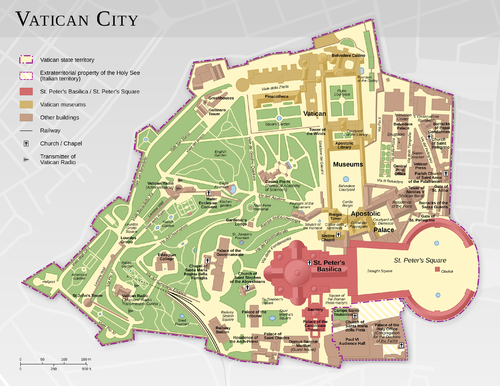
 Vatican City State or the State of Vatican City  is a walled enclave within the city of Rome. With an area of approximately 44 hectares (110 acres), and a population of 1000, it is the smallest state in the world by both area and population. However, formally it is not sovereign, with sovereignty being held by the Holy See, the only entity of public international law that has diplomatic relations with almost every country in the world.

 It is an ecclesiastical or sacerdotal-monarchicalstate (a type of theocracy) ruled by the Bishop of Rome – the Pope. The highest state functionaries are all Catholic clergy of various national origins. Since the return of the Popes from Avignon in 1377, they have generally resided at the Apostolic Palace within what is now Vatican City, although at times residing instead in the Quirinal Palace in Rome or elsewhere.


Vatican City is distinct from the Holy See  which dates back to early Christianity and is the main episcopal see of 1.2 billion Latin and Eastern Catholic adherents around the globe. The independent city-state, on the other hand, came into existence in 1929 by the Lateran Treaty between the Holy See and Italy, which spoke of it as a new creation, not as a vestige of the much larger Papal States (756–1870), which had previously encompassed much of central Italy. According to the terms of the treaty, the Holy See has "full ownership, exclusive dominion, and sovereign authority and jurisdiction" over the city-state.


Within Vatican City are religious and cultural sites such as St. Peter's Basilica, the Sistine Chapel and the Vatican Museums. They feature some of the world's most famous paintings and sculptures. The unique economy of Vatican City is supported financially by the sale of postage stamps and tourist mementos, fees for admission to museums, and the sale of publications.

The name "Vatican" predates Christianity and comes from the Latin Mons Vaticanus, meaning Vatican Mount. The territory of Vatican City is part of the Mons Vaticanus, and of the adjacent former Vatican Fields. It is in this territory that St. Peter's Basilica, the Apostolic Palace, the Sistine Chapel, and museums were built, along with various other buildings. The area was part of the Roman rione of Borgo until 1929. Being separated from the city, on the west bank of the Tiber river, the area was an outcrop of the city that was protected by being included within the walls of Leo IV (847–55), and later expanded by the current fortification walls, built under Paul III (1534–49), Pius IV (1559–65) and Urban VIII (1623–44).

The Fidget Spinner 2017

A fidget spinner is a type of stress-relieving toy. A basic fidget spinner consists of a bearing in the center of a design made from any of a variety of materials including brass, stainless steel, titanium, copper and plastic. The toy has been advertised as helping people who have trouble focusing or fidgeting (such as those with ADHD, autism, or anxiety) by acting as a release mechanism for nervous energy or stress. Experts were divided on this claim, with some supporting it while others disputed its scientific basis and argued the toy may actually be more distracting.

 Although they were invented in the 1990s, fidget spinners became a popular toy in 2017. Often marketed with health benefits, the toy began being used by school children, resulting in some schools banning the spinners, arguing that the toy became a distraction in classrooms. Other schools are allowing the toy to be used discreetly by children in order to help them concentrate.


Fidget spinners are often designed with the intent to relieve stress. Basic fidget spinners consist of a two or three pronged design with a bearing in its centre circular pad. An individual holds the centre pad while the toy spins. Designs are made from various materials including brass, stainless steel, titanium, copper, aluminium, and 3D printed plastic. The types of of bearings generally used are ceramic, metal (stainless steel or chrome), and hybrid designs. Additionally, bearings can be different to adjust for the design's spin time, vibration, and noise, leading to unique sensory feedback.

When fidget spinners rose in popularity in 2017, many publications discussed their claimed benefits for individuals with ADHD, autism, or anxiety. As Money detailed, fidget spinners were "created and marketed as a calming tool used to stay focused.Some fidget spinners sold on Amazon were advertised as "stress relievers." Hettinger accounted her knowledge of "a special needs teacher who used it with autistic kids, and it really helped to calm them down." James Plafke of Forbes explained, "ultimately, though, there isn't enough research regarding whether or not these spinners can actually help people from a mental health standpoint." Experts themselves were polarized on this claim, as some supported the notion of its benefit for those with ADHD and autism, while others argued the spinners could actually be more distracting than helpful with focusing.

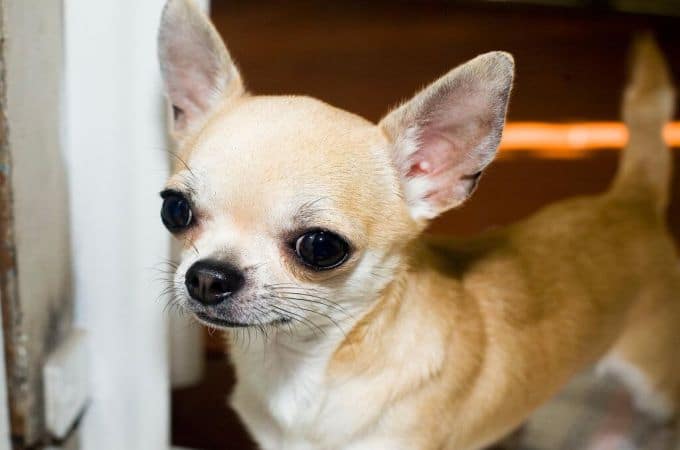
CHIHUAHUA DOG BREEDS


 TYPES OF CHIHUAHUA DOG BREEDS


        Most people don’t know that there are several types of Chihuahua since they mistakenly assume that all Chihuahuas look alike. Sorting out different types of Chihuahua is easy if that person knows the physical difference between various Chihuahua types.Understanding the different types of Chihuahuas is not necessary, but if you’re the kind of dog lover who wants a particular kind of dog from one of the types of Chihuahua breed then in your case it is something you need to know.

          The reason people choose and select a dog from various types of Chihuahua is due to the physical preference on their part. Some like a Chihuahua whose coat hair is even and short. Others like a long-haired one due to the elegant and classic it projects.
Technically there is only one type or breed of Chihuahuas. Breeding standards among several dog kennels like AKC classifies Chihuahuas as a short coat or a long coat. In unofficial standards when a person uses the term “types of Chihuahuas,” he/she is referring to differences of the dog’s body type, head shape, and coat length. These differences are superficial and minor, buy they do provide a person some measuring standard when selecting a dog from various Chihuahua types.

1.SMOOTH- COAT CHIHUAHUA


          The hairs on this dog are shorter which means that it shed less that it’s long-haired counterpart and requires less combing and grooming. Like its long-haired kindred, it is one of the officially recognized Chihuahua breeds. For a dog that possesses short hair, it sheds a lot it making this type of Chihuahua unsuitable for people with dog hair allergies. However, the Chihuahua’s short-haired coat ensures that the dog requires less grooming and virtually no trimming. Of course, it is evident that from time to time the dog needs a bath to be clean. People who have difficulty or simply too busy to comb, groom and trim a Chihuahua dog will often have this dog from other types of Chihuahua. The smooth-Coat Chihuahua comes in different color variations and can either be an apple head Chihuahua or a deer head Chihuahua.

2.LONG-COAT CHIHUAHUA


            This dog type is one of the varieties recognized officially by dog kennels. The hair length of a long-Coat Chihuahua varies, but they are long not short. The dog comes in different colors. In spite of its long hair, it doesn’t shed that much, though you still need to comb and groom the dog to keep it tidy. Trimming is not required for the dog while the groom necessary as it is can be done minimally to the Chihuahua dog. The coat of long-haired Chihuahuas is smooth to one’s touch, and the hair can have the feeling like velvet or whiskery in texture.

         A fair warning, though, make sure that you can attend to this dog’s occasional trimming, daily grooming with a brush and a bathing needs since neglecting those needs can have adverse effects on the dog. The Chihuahua’s long-haired coat takes three or more years to grow at its full length once it reaches maturity. The apple head Chihuahua and the deer head Chihuahua have this kind of coat. This dog is a favorite mostly among dog lovers who like to take their pets to dog shows to compete.


3.APPLE HEAD CHIHUAHUA


           The dog got its name due to its head which has a shape like an apple. The apple head Chihuahua is the most typical dog that one can as pet. In fact, dog shows a Chihuahua having a well-rounded apple shaped head is the primary requirement to be considered as a real Chihuahua. The dog has a snout that is smaller compared to a deer head Chihuahua and its stop is more prominent at a 90-degree angle. Like other types of Chihuahua their coat color varies from one dog to another. Chihuahuas of this type who suffer from hydrocephalus have heads that are big but proportioned to their bodies. Their eyes bulge out from their sockets. If you plan on getting a dog like this from other types of Chihuahua, make sure to check if it has hydrocephalus.


4. TEA-CUP CHIHUAHUA


          This refers to any Chihuahua dog that is at the height of nine inches and weighs only less than five pounds. The Teacup Chihuahua looks and acts like its bigger Chihuahua cousins with size being the only thing that makes them different. Just bear in mind that the Teacup Chihuahua should be an adult dog while fulfilling the height and weight requirements. It the dog outgrew the height and weight requirements when it becomes an adult then it’s not a Teacup Chihuahua.


5. DEER HEAD CHIHUAHUA


        The slightly less-popular kindred of the apple-shaped head Chihuahua and like its namesake the dog’s head is elongated as well as having a narrower snout. Also, the deer head Chihuahua’s body is longer with long legs though this same body. Though the shape of the head is not acceptable in dog show communities, the dog is a favorite by some people as a pet and as a breeding dog by some breeders. Unlike their apple head cousins, this Chihuahua has fewer genetic problems making them the healthiest type of dogs among different types of Chihuahuas. Make sure to check if the dog has a severe health issue before buying it.


Pyramids the Wonder

A pyramid is a structure whose outer surfaces are triangular and converge to a single point at the top, making the shape roughly a pyramid in the geometric sense. The base of a pyramid can be trilateral, quadrilateral, or any polygon shape. As such, a pyramid has at least three outer triangular surfaces (at least four faces including the base). The square pyramid, with square base and four triangular outer surfaces, is a common version.

 A pyramid's design, with the majority of the weight closer to the ground] and with the pyramidion on top means that less material higher up on the pyramid will be pushing down from above. This distribution of weight allowed early civilizations to create stable monumental structures. It has been demonstrated that the common shape of the pyramids of antiquity, from Egypt to Central America, represents the dry-stone construction that requires minimum human work.


Pyramids have been built by civilizations in many parts of the world. The largest pyramid by volume is the Great Pyramid of Cholula, in the Mexican state of Puebla. For thousands of years, the largest structures on Earth were pyramids—first the Red Pyramid in the Dashur Necropolis and then the Great Pyramid of Khufu, both of Egypt, the latter is the only one of the Seven Wonders of the Ancient World still remaining.

Khufu's Pyramid is built mainly of limestone (with large red granite blocks used in some interior chambers), and is considered an architectural masterpiece. It contains over 2,000,000 blocks ranging in weight from 2.5 tonnes (5,500 lb) to 15 tonnes (33,000 lb) [5] and is built on a square base with sides measuring about 230 m (755 ft), covering 13 acres. Its four sides face the four cardinal points precisely and it has an angle of 52 degrees. The original height of the Pyramid was 146.5 m (488 ft), but today it is only 137 m (455 ft) high, the 9 m (33 ft) that is missing is due to the theft of the fine quality white Tura limestone covering, or casing stones, for construction in Cairo. It is still the tallest pyramid.


Many giant granite temple pyramids were made in South India during the Chola Empire, many of which are still in religious use today. Examples of such pyramid temples include Brihadisvara Temple at Thanjavur, the Temple of Gangaikondacholapuram and the Airavatesvara Temple at Darasuram. However the largest temple pyramid in the area is Sri Rangam in Srirangam, Tamil Nadu. The Thanjavur temple was built by Raja raja Chola in the 11th century. The Brihadisvara Temple was declared by UNESCO as a World Heritage Site in 1987; the Temple of Gangaikondacholapuram and the Airavatesvara Temple at Darasuram were added as extensions to the site in 2004.