Showing posts with label SharvinNair96. Show all posts

Saturday, 2 December 2017

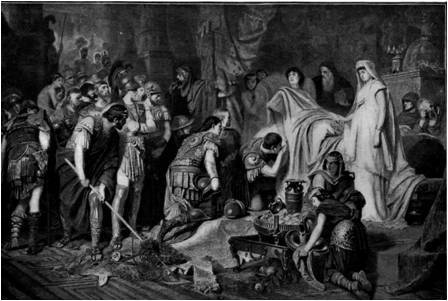
Alexander the Great – the greatest leader of all time?

‘My boy, you must find a kingdom big enough for your ambition. Macedon is too small for you’, the words of King Phillip II of Macedon were prophetic as he addressed his son Alexander after he had tamed a fearful horse at the age of just 10.


Alexander would grow up to be one of the world’s most legendary military commanders. Born into an era of petty tyrants and brutality Alexander the Great used the exceptional education he received – from, among others, Aristotle – and used it to marshal his forces in nearly impossible battles. He emerged victorious over the course of 13 years of battles from which was forged one of the largest empires the world has ever seen.

Alexander the Great was born in 356 BC to King Phillip II of Macedon and his wife Olympias. Following his father’s assassination Alexander succeeded him to the Macedon throne and the 20-year-old King ruthlessly murdered all his rivals to the crown. This ruthlessness would contribute to Alexander conquering most of the known world with an empire that stretched for 10,000 miles and encompassed the Mediterranean, most of Europe and touched the borders of India. Alexander the Great was prone to fits of savage tempers and in later life he succumbed to megalomania

Although not exactly what one would call a diplomat, he was a military genius who used guile, ingenuity and lateral thinking to defeat often vastly superior forces. His greatest victory was at the Battle of Gaupamela in 331 BC in what today is Iraq.

The Greek language was also a tool that Alexander the Great wielded with great purpose. Prior to the expansion of his empire there were hundreds of little spoken languages, when he imposed the use of Greek, it created a common language that fostered the expansion of culture, commerce and hegemony amongst the conquered lands.


Above all else Alexander the Great was a commander because of his sheer bloody-minded arrogance and his belief in his own superiority. He knew he was right and through his charismatic dominance he controlled, after all he firmly believed he was a direct descendent of Achilles. This belief was instilled in him from an early age by his father and his tutors at school, church and in the military.

When he died in 323 BC, in suspicious circumstances at the age of just 32, he left behind a huge empire in which a cultural revolution had started but which was always on the brink of a fall into chaos.


Thursday, 30 November 2017

The Heroes of Malaysia : Tunku Abdul Rahman @ Bapa Kemerdekaan


TUNKU Abdul Rahman envisioned Malaysia as a nation founded upon the noble principles of liberty, human rights, natural justice and the rule of law, possessed of a leadership committed to serve the welfare, happiness and peace of the people as a whole, devoid of discrimination of any sort. He resolutely believed in the supremacy of the Constitution, which he deemed must always be respected by all Malaysians, regardless of social standing, ethnicity, political preference or religious persuasion.

He firmly held that the principles of good governance enshrined in the political ideal of constitutionalism served as a permanent and reliable guarantee for the stability and the very continuity of the nation. Driven by his ingrained political creed of liberalism and a deep consciousness of the country’s plural heritage as well as of his own immediate maternal Thai extraction, the Tunku embraced a liberal approach to the country’s rich and diverse cultures and religions throughout his life.

Little wonder that the Tunku was so fondly revered as Bapa Malaysia among Malaysians from all walks of life. This was true not just during the period he held the helm of the country as the first Prime Minister but right up to his very last days. Only a few world leaders can boast of such continuing adulation. We also owe it to the Tunku’s insight in statecraft, sagacious statesmanship and diplomatic adroitness that we achieved political independence earlier than most people expected, and in such a healthy and amicable fashion.

This was more creditable in light of the challenges posed in garnering a multi-ethnic, multi-cultural and multi-religious populace into a cohesive and progressive nation that was to confidently take on its role and responsibilities in the international arena. From its birth as an independent country, Malaya was drawn into the thick of the Cold War that was characterised by a fierce rivalry between the democratic world led by the United States of America and Western Europe on the one side and the communist bloc of countries represented by the Soviet Union, the Peoples’ Republic of China and Eastern Europe on the other.

The Tunku chose to steer the nation’s foreign policy in a distinctive pro-Western direction. Having experienced the atrocities and wanton destruction the internal communist insurgency had inflicted on the people since 1948 and overcoming the subversive communist threat in 1960, the Tunku could not help but be sensitive to the threats communism posed elsewhere in the world. He never hesitated to take a strong stand against these threats. For a small, newly independent country to pursue a stridently anti-communist foreign policy most certainly constituted a courageous, principled stand.

The Tunku was among the very first to stoutly condemn communist China’s “rape of Tibet” when in 1959 Communist Chinese troops “subjugated” the people of Tibet. In the same anti-communist fervour, the Tunku vehemently castigated China for “naked aggression against India” when the Sino-Indian border-conflict flared up in 1962. The Tunku was in India on that fateful day on an official visit. In several Indian cities, as part of his itinerary, he vehemently condemned China’s aggression and repeatedly reiterated Malaya’s support for India. I am told that, as a symbolic expression of camaraderie, he donated his blood for the Indian jawans (soldiers) who were bravely fighting in defence of democracy.

His spontaneous gesture was rewarded with profound appreciation by the government and the people of India from all across the country. On his return home, the Tunku embarked on a bold initiative in launching a public campaign, the “Save Democracy Fund” which raised over a million dollars to help India defend itself against communist Chinese armed attacks. The Tunku’s spontaneous support in India’s hour of need had the electrifying effect of winning the hearts and minds of Indians. Thus, although he was a leader of a relatively small nation, the Tunku was held in high esteem in India for years to come. Our students located all over India can vouch how they were embraced with the warmest of hospitality by complete strangers and treated with brotherly affection because of the Tunku’s unequivocal support for India.

On a personal note, I nostalgically recall the “special treatment” accorded to me at the official level, as well as in private Indian circles, during my diplomatic stints as Assistant High Commissioner in Madras (present day Chennai) from 1969 to 1973, and subsequently, as Counsellor in our High Commission in New Delhi from mid-1973 to 1975. Many a leader from among far more powerful countries was somewhat perplexed over the Tunku’s anti-communist policy stance which was distinctly vociferous even in comparison to the non-communist posture which neighbouring Singapore opted to adopt.


No doubt the Tunku’s staunchly anti-communist foreign policy was drawn from historical experiences of combating the internal communist insurgency and the steady spread of communism in the region. His ability to successfully steer the development and progress of our infant nation in the face of serious challenges encountered in the international arena is largely attributable to his enlightened vision, sagacious statesmanship and diplomatic acumen.


The leadership qualities, personal skills and gentility which the Tunku personified and brought to bear in the country’s diplomacy and conduct of foreign affairs were in fact a unique feature of the Malay royal families, aristocracy and elite that merit appreciation in a separate article.TUNKU Abdul Rahman envisioned Malaysia as a nation founded upon the noble principles of liberty, human rights, natural justice and the rule of law, possessed of a leadership committed to serve the welfare, happiness and peace of the people as a whole, devoid of discrimination of any sort. He resolutely believed in the supremacy of the Constitution, which he deemed must always be respected by all Malaysians, regardless of social standing, ethnicity, political preference or religious persuasion.

He firmly held that the principles of good governance enshrined in the political ideal of constitutionalism served as a permanent and reliable guarantee for the stability and the very continuity of the nation. Driven by his ingrained political creed of liberalism and a deep consciousness of the country’s plural heritage as well as of his own immediate maternal Thai extraction, the Tunku embraced a liberal approach to the country’s rich and diverse cultures and religions throughout his life.

Little wonder that the Tunku was so fondly revered as Bapa Malaysia among Malaysians from all walks of life. This was true not just during the period he held the helm of the country as the first Prime Minister but right up to his very last days. Only a few world leaders can boast of such continuing adulation. We also owe it to the Tunku’s insight in statecraft, sagacious statesmanship and diplomatic adroitness that we achieved political independence earlier than most people expected, and in such a healthy and amicable fashion.

This was more creditable in light of the challenges posed in garnering a multi-ethnic, multi-cultural and multi-religious populace into a cohesive and progressive nation that was to confidently take on its role and responsibilities in the international arena. From its birth as an independent country, Malaya was drawn into the thick of the Cold War that was characterised by a fierce rivalry between the democratic world led by the United States of America and Western Europe on the one side and the communist bloc of countries represented by the Soviet Union, the Peoples’ Republic of China and Eastern Europe on the other.

The Tunku chose to steer the nation’s foreign policy in a distinctive pro-Western direction. Having experienced the atrocities and wanton destruction the internal communist insurgency had inflicted on the people since 1948 and overcoming the subversive communist threat in 1960, the Tunku could not help but be sensitive to the threats communism posed elsewhere in the world. He never hesitated to take a strong stand against these threats. For a small, newly independent country to pursue a stridently anti-communist foreign policy most certainly constituted a courageous, principled stand.

The Tunku was among the very first to stoutly condemn communist China’s “rape of Tibet” when in 1959 Communist Chinese troops “subjugated” the people of Tibet. In the same anti-communist fervour, the Tunku vehemently castigated China for “naked aggression against India” when the Sino-Indian border-conflict flared up in 1962. The Tunku was in India on that fateful day on an official visit. In several Indian cities, as part of his itinerary, he vehemently condemned China’s aggression and repeatedly reiterated Malaya’s support for India. I am told that, as a symbolic expression of camaraderie, he donated his blood for the Indian jawans (soldiers) who were bravely fighting in defence of democracy.

His spontaneous gesture was rewarded with profound appreciation by the government and the people of India from all across the country. On his return home, the Tunku embarked on a bold initiative in launching a public campaign, the “Save Democracy Fund” which raised over a million dollars to help India defend itself against communist Chinese armed attacks. The Tunku’s spontaneous support in India’s hour of need had the electrifying effect of winning the hearts and minds of Indians. Thus, although he was a leader of a relatively small nation, the Tunku was held in high esteem in India for years to come. Our students located all over India can vouch how they were embraced with the warmest of hospitality by complete strangers and treated with brotherly affection because of the Tunku’s unequivocal support for India.


On a personal note, I nostalgically recall the “special treatment” accorded to me at the official level, as well as in private Indian circles, during my diplomatic stints as Assistant High Commissioner in Madras (present day Chennai) from 1969 to 1973, and subsequently, as Counsellor in our High Commission in New Delhi from mid-1973 to 1975. Many a leader from among far more powerful countries was somewhat perplexed over the Tunku’s anti-communist policy stance which was distinctly vociferous even in comparison to the non-communist posture which neighbouring Singapore opted to adopt.

No doubt the Tunku’s staunchly anti-communist foreign policy was drawn from historical experiences of combating the internal communist insurgency and the steady spread of communism in the region. His ability to successfully steer the development and progress of our infant nation in the face of serious challenges encountered in the international arena is largely attributable to his enlightened vision, sagacious statesmanship and diplomatic acumen.

The leadership qualities, personal skills and gentility which the Tunku personified and brought to bear in the country’s diplomacy and conduct of foreign affairs were in fact a unique feature of the Malay royal families, aristocracy and elite that merit appreciation in a separate article.

Sunday, 12 November 2017

THE LEADERSHIP CHALLENGE


Source: Google Image
There are five challenges most leaders will face during their tenure as leaders, whether working for a corporation or for themselves.

Challenge 1 – Creating and Maintaining a Diversified Team
All leaders work with teams. These teams include diverse individuals with different backgrounds,
experiences and even ethnicity‘s. One of the greatest challenges of leadership in modern society is
finding ways to create a unified front among team members. This is often difficult when members of a team may remain in remote areas. Thanks to modern technology, not all members of a team will
necessarily work in the same facility. A leader can overcome the challenges associated with creating
and preserving a diversified team by encouraging horizontal communication and knowledge sharing.
What this means is information does not come from the top-down alone, but instead from person to
person. The best way to create and uphold a diversified yet efficient team is to make sure each member of the team receives routine communications.

Source: Google Image
Challenge 2 – Inspiring Others to Share the Leader’s/Organizational Vision
A mission and vision are essential to any successful business. It is not enough, however, for a leader
to promote a vision or mission. Rather, it is the role of a leader to ensure that every member of their
team and the organization share a common mission and vision. A leader can take on the challenge of
inspiring others by clearly communicating how a company‘s mission and vision will benefit not just the organization, but also the people working for it. By explaining how each incumbent will benefit from the mission, a leader will inspire others to share the same corporate vision.

Source: Google Image

Challenge 3 – Facilitating Open and Clear Communication among Coworkers:
Clear and concise communication is essential for success. A leader has a duty to communicate well
with others, but also teach others how to communicate clearly.
Source: Google Image
Challenge 4 – Empowering Incumbents to Take Action:
The days of micromanagement are over. Nowadays, employees want to feel inspired. The best way
to inspire employees is by empowering them to excel and achieve. A leader‘s role includes providing employees the ability to make proactive choices. That means including employees in the decision-making process so they become part of the organizational team. A leader can also empower employees by encouraging them to write down an action plan for each problem that needs solving in the organization. This process should include setting up goals and the exact steps necessary to take action to resolve problems.

 Challenge 5 – Providing Inspiration to Others
Last, but certainly not least, a leader must provide inspiration to others. Some of the world‘s best
leaders are defined by their ―charisma‖ or ability to inspire and motivate others. A leader must remain committed to the cause, but also recognize the potential in employees to achieve great things.

LEADERSHIP BY EXAMPLE

             
Source: Google Image

 A great leader is a wise driver. They inspire to empower and stimulate the employees to achieve excellent performance. They do not engage in office politics and activities that do not contribute to the organization's success. The good leader is to provide the right platform for the accomplice to contribute clever ideas, by spreading it throughout the organization, and ensuring a clever idea is implemented promptly and rewarding the right donor to the idea. All the above will not be achieved if the leader does not have a good example.

Courage is one of the qualities and good example, which is very important to have a leader. Wisdom alone is not enough if there is no courage. The main task of the leader determines and ensures that the person he leads does work perfectly and perfectly.

Source: Google Image

      Without the firmness and insistence that the work is done perfectly, the person he leads will not honour it, instead taking advantage of the leader's failure to control them. With the wisdom of leaders controlling work progress in diplomacy and patience, but with courage the leader controls the person he leads in adhering to discipline and action.

To illustrate a good example, leaders must adhere to discipline and appreciate time. A good leader becomes the first person to get to the office and the last person out of the office. If the leader expects the person he is working to work hard, he first must show his seriousness in carrying out his duties. The leader is not just an observer and project monitor, but his own good leader will also go down the field to do the job. Even for more difficult and challenging jobs, the leader is doing it and completing it up to the point.
Source: Google Image

    Leaders must also obey the rules and regulations at work properly, if leaders ease the rules, everyone will do the same, even they will underestimate and disparage the rules. If we are leaders there is a good attitude, we can give good to the people who are led, and for our good, they will reward our good, by working hard and discipline in compliance with the rules at work.

A good example should be shown by the leader is an attitude of considerate and not too pushy. It is better to let the worker perform the task willingly and enthusiastically, than to engage in scolding the worker. Good leaders only need to give direction and control, without blaming each other in their direction.

Among the hard things that one must do is confess it. No one likes to be the blame person. The person who can admit wrong is the person who knows the weakness. Knowing wrong does not mean guilty but a sign of slavery to God. God has seen everything that is light and vague, giving full soul to God. "Take care of yourself, keep your faith, worship and morals".
Source: Google Image


Friday, 10 November 2017

5 TYPE OF LEADERSHIP

1. Autocratic Leadership
Autocratic leadership style is centered on the boss. In this leadership the leader holds all authority and responsibility. In this leadership, leaders make decisions on their own without consulting subordinates. They reach decisions, communicate them to subordinates and expect prompt implementation. Autocratic work environment does normally have little or no flexibility. In this kind of leadership, guidelines, procedures and policies are all-natural additions of an autocratic leader. Statistically, there are very few situations that can support autocratic leadership.
Source: Google Image


2. Democratic Leadership
In this leadership style, subordinates are involved in making decisions. Unlike autocratic, this headship is centred on subordinates’ contributions. The democratic leader holds final responsibility, but he or she is known to delegate authority to other people, who determine work projects. The most unique feature of this leadership is that communication is active upward and downward. With respect to statistics, democratic leadership is one of the most preferred leadership, and it entails the following: fairness, competence, creativity, courage, intelligence and honesty.
Source: Google Image


3. Laissez-faire Leadership
Laissez-faire leadership gives authority to employees. According to a central, departments or subordinates can work as they choose with minimal or no interference. According to research, this kind of leadership has been consistently found to be the least satisfying and least effective management style.
Source: Google Image


4. Strategic Leadership Style
Strategic leadership is one that involves a leader who is essentially the head of an organization. The strategic leader is not limited to those at the top of the organization. It is geared to a wider audience at all levels who want to create a high-performance life, team or organization. The strategic leader fills the gap between the need for new possibility and the need for practicality by providing a prescriptive set of habits.  An effective strategic leadership delivers the goods in terms of what an organization naturally expects from its leadership in times of change. 55% of this leadership normally involves strategic thinking.
Source: Google Image


5. Facilitative Leadership

Facilitative leadership is too dependent on measurements and outcomes – not a skill, although it takes much skill to master. The effectiveness of a group is directly related to the efficacy of its process. If the group is high functioning, the facilitative leader uses a light hand on the process. On the other hand, if the group is low functioning, the facilitative leader will be more directives in helping the group run its process. An effective facilitative leadership involves monitoring of group dynamics, offering process suggestions and interventions to help the group stay on track.

Source: Google Image

Monday, 22 May 2017

Chapter Called Damn Young Navigator

Until today, the best luck I had had as cadet was that day. The officer assigned to me as company’s tutor with the time, has also become a friend, and an important mentor. For me this man is an example as merchant marine, a great professional who knows his labor environment perfectly, and somebody who speak with you about ship’s theory, anchoring or navigation with a deep knowledge, even with maths or facts. I, as you can imagine, have a great illusion about the career I have chosen, but it was with him when I developed myself until find out this passion. As i singed on my first cadet ship is SS Puteri Firus Satu, it's a LNG Carrier vessel basically.


The first day, you know, nervous appearing everywhere, everybody look at you because they have never seen you before, you got introduced to a lot of people, you got a lot of information that you need to absorb quickly, and you, if you are a novice as I was, feels like a cat in a garage. That day, and the days after it, people were really comprehensive with me, they helped me a lot and they explained me everything I wanted or needed, so my adaptation was easy.


Here I didn’t start doing officer’s stuff. One of the mistakes most people do, as cadets, and as officers in charge of cadets, is to give the cadet officer’s tasks. Teaching him directly how to correct charts, how to navigate, or how to do all the paperwork, and because of that many cadets become officers and don’t know even where are situated their own faces.


Thanks to that time, today I’m not an expert, but I know what the engine department do, how they work, and I even know a bit about how the engines work. All this time was really helpful for the next vessel I went on board as deck cadet, and where I am at the time I am writing this, the MT Bunga Allium.


After the time I spent with the ABs and with the Pumpman I started to spend more time with the second officers. I had just seen them around the ship or in the maneuvers (I always went to maneuvers, most of the time I went with the second officer to the aft maneuver but I also went with the bosun to the fore maneuver  for a while). At that time I was spending more time on the bridge with the captain and the OOW, doing maintenance to the LSA / FF equipment, correcting publications, or being the delivery boy of the Chief mate. Since then I learned many things, mainly administrative stuff, stationery, second officer tasks, because at the end that is the position I will be able to hold when I will finish my cadet period, so I am really grateful for all I learn there, because, being honest, I don’t know how is it in other ships.


The cadet time is passing and is not coming back, and this time is the perfect time to be “silly”, once you become an officer, to not know something can be a problem, especially if you’re getting paid for knowing it.This vessel was really special for me, I experienced there many first times on a ship, and the people I met have helped me very much to improve myself and to find out what I want  to do in relation to the maritime world. For some her can be only a ferry, boring, full of maneuvers, and with a very short route, but for me, the MT Bunga Allium will always be something else, she will always be the vessel where I spent my first days as Cadet, and for this she will be always special for me.

#EveryLegendWasABeginner

Hero is Rocky

Legends nowadays was a beginner one day ago.


" It Ain't Over 'till It's Over "


Robert "Rocky" Balboa is the title character of the Rocky series. The character was created by Sylvester Stallone, who also portrayed him in all seven Rocky films. He is depicted as an everyman who started out by going the distance and overcoming obstacles that had occurred in his life and career as a professional boxer. While he is loosely based on Chuck Wepner, a one-time boxer who fought Muhammad Ali and lost on a TKO in the 15th round, the inspiration for the name, iconography and fighting style came from boxing legend Rocky Marciano.


The character is widely considered to be Stallone's most iconic role and is often considered the role that started his film career. He received critical acclaim for his performance in the first movie, earning Academy Award and Golden Globe Award nominations. When Stallone reprised his role once again in 2015 for Creed, his performance received wide acclaim and he received his first Golden Globe Award for Best Supporting Actor, along with his third Oscar nomination for Best Supporting Actor, the National Board of Review Award for Best Supporting Actor and several other accolade


Rocky Balboa fights as a southpaw (left-handed). In the second film, against Apollo Creed, he comes out orthodox and Mickey intends for him to switch back to southpaw late in the last round, but Balboa refuses saying "no tricks, I ain't switching". Mickey tells him that Apollo is ready for him (if he continues using his right) and so towards the end of the round, he does indeed lead with his left. The real reason for this is Sylvester Stallone tore his pectoral muscles in training,[citation needed] but the idea was probably taken from the great left-handed boxer "Marvelous" Marvin Hagler who would sometimes come out orthodox to confuse opponents.


Rocky was an all or nothing brawler coming into his first bout with Creed, however under the training of Mickey he began to develop his boxing skills ahead of the rematch, which were mastered during his reign as world champion, he became a world class hybrid fighter, possessing the qualities of an inside fighter, brawler, and swarmer. With the exception of his rematch against Clubber Lang (where he fights as an outside fighter), he often advances quickly upon his opponents, driving them into the ropes in order to attack the body. Balboa's best attribute is without question his near-superhuman ability to absorb a multitude of the hardest hits without falling  an attribute he often employs on purpose to wear down his opponents, sacrificing defensive strategy to land his own punches.  


This is due to a rare brain abnormality in which Rocky's cerebral hemispheres stay tightly relative to each other due to an extremely strong corpus callosum, preventing him from losing consciousness due to latitudinal impacts. Because of this rare talent, Balboa can afford to keep his hands in position to strike rather than up high to block. Because he takes more punches than he throws, it is easy to overlook his incredible punching power. Rocky also has an uncanny ability to sense weakness in his opponents, often capitalizing on every shift in momentum possible. He is acknowledged as having the most devastating body attack in the sport, with his body blows causing internal bleeding in Creed and breaking Drago's ribs. After going two rounds with Balboa, Ivan Drago told his trainer (in Russian), "He's not human, he's like a piece of iron." Mason Dixon once remarked about Balboa: "that guy's got bricks in his gloves." These qualities, in concert, helped land him a high percentage of KO victories over the course of his career.


Honors:

The Rocky character is immortalised by a bronze statue erected near the Rocky Steps in Philadelphia recalling the famous scene from the original Rocky movie.


In 2011, Sylvester Stallone was inducted into the International Boxing Hall of Fame for his work on the Rocky Balboa character, having "entertained and inspired boxing fans from around the world". Additionally, Stallone was awarded the Boxing Writers Association of America award for “Lifetime Cinematic Achievement in Boxing.”

A poll of former heavyweight champions and boxing writers ranked Balboa as the best boxer in the film series.

In 2014, Rocky Balboa was the Inaugural Induction to the Fictitious Athlete Hall of Fame

A day full of emotions at Stamford Bridge

John Terry got the send-off he wanted, Chelsea got their hands on the Premier League trophy and Thibaut Courtois and César Azpilicueta achieved their personal milestones. This was a day for those inside Stamford Bridge and to hell with the cynics outside.

Champions Chelsea comfortably secured a record 30th League win of the season against relegated Sunderland, but the game was largely a sideshow to the pre-planned party.
Sunderland goalkeeper Jordan Pickford agreed to punt the ball out of play in the 26th minute, so that Chelsea could form a guard of honour for their No 26, Terry, to be replaced by Gary Cahill.
Purists will still be complaining of the final game of the season descending into farce, but Chelsea’s supporters who hung banners that read ‘JT thank you for everything’ and ‘Captain, Leader, Legend’ loved every minute.


With 717 Chelsea appearances to his name and the chance to earn a 16th winners’ medal in next Saturday’s FA Cup final that he will most probably watch from the substitutes’ bench, Terry had earned the right to time his Stamford Bridge farewell just the way he wanted.
Having lifted the Premier League trophy with Cahill, Terry was given the microphone and it was no surprise that the tears flowed as he assured the Stamford Bridge faithful that, one day, he will be back.

“You’ve given me everything from day one, when I first started out,” said 36-year-old Terry, who had his wife Toni and his children on the pitch. “You picked me up when I was down, sung my name when I’ve had bad days and disappointed you as well.
“Thank you will never ever be enough, but I’ll tell you what: I’ll be back here one day. I’m going to be supporting the players and the club from the bottom of my heart. Thank you so much, I love you all.”

 “I wish, for him and for his family, the best in the future. For me, for the club, it would be a great loss next season without him. He helped me a lot this season, on and off the pitch. And now we must respect his decision.”

“A lot of emotions today,” said Conte. “I think it’s great to finish the season this way, to celebrate a fantastic season. We won the League with 30 wins, which is very positive for us. Honestly, it was very difficult to imagine this, to be celebrating winning the League, but it happened. It happened only because we worked very hard.”


Rather than travelling back with his squad, Moyes was due to stay in London for a meeting with Sunderland owner Ellis Short on Monday and was non-committal on his future.
“I’m gutted we’ve been relegated, really disappointed the way the season’s gone,” said Moyes. “But you know? What do you do? Football has winners and it has people who lose. Look at Chelsea. They’re winning today. I hope in the future we’re involved in something similar.”


Red Eagles - Mark The Date

20 MEI 2017 - Meraikan kejayaan muncul juara Piala FA bersama pemain Kedah selepas berjaya menumpaskan Pahang 3-2 dalam final di Staduim Shah Alam.


Walaupun hilang khidmat ketua jurulatih, Tan Cheng Hoe ketika kempen Piala FA memasuki tempoh kritikal, namun Kedah masih mampu menjulang trofi selepas menewaskan Pahang 3-2 dalam aksi final penuh dramatik dan mendebarkan di Stadium Shah Alam, malam ini.

Mohd. Nidzam Adzha Yusoff yang menggalas tugas jurulatih sementara pada separuh akhir kedua menentang Terengganu, 13 Mei lalu selepas Cheng Hoe meletak jawatan untuk menjadi penolong jurulatih Harimau Malaya menghadiahkan Piala FA keempat buat Kedah.

Dua jaringan Baddrol Bakthiar dan gol penyerang dari Denmark, Ken Ilso Larsen memastikan skuad Lang Merah mengulangi pencapaian 2008, 2007 dan 1996. Ini juga trofi kedua berturut-turut buat Lang Merah selepas Piala Malaysia 2016.


Bagaimanapun, kemenangan tidak diraih dengan mudah apabila Pahang memberi tentangan hebat sehingga wisel penamat, biarpun beraksi dengan 10 pemain selepas Francisco Insa Bohigues dibuang padang pada minit ke-33.

Di depan 80,000 penonton, Kedah membuka jaringan seawal minit ke-20 selepas Larsen menyempurnakan hantaran Mohd. Syazwan Zainon.

Pahang semakin tertekan apabila Bohigues dibuang padang selepas menerima kad kuning kedua ekoran terjahan keras yang dilakukan terhadap Mohd. Rizal Mohd Ghazali.


Kedah memanfaatkan kelebihan berdepan 10 pemain lawan apabila menggandakan kedudukan menerusi Baddrol yang mengambil kesempatan dalam situasi kucar kacir di kawasan lawan dengan melakukan rembatan leret menewaskan penjaga gol Pahang, Wan Muhammad Azraie.

Ketinggalan 0-2 dan beraksi tanpa seorang pemain bagaimanapun tidak mematahkan semangat anak-anak buah Dollah Salleh, sebaliknya Pahang berjaya merapatkan jurang menerusi pemain dari Korea Selatan, Heo Jae-won pada waktu kecederaan.

Turun selaku juara 2014 dan 2006, Pahang bertindak garang sebaik sahaja babak kedua bersambung.


Begitupun, asakan demi asakan yang diatur Tok Gajah gagal menembusi gawang Kedah, sebaliknya Lang Merah meledak gol ketiga menerusi Baddrol pada minit ke-76.

Ketika Kedah menyangkakan kedudukan mereka sudah selesa, Sumareh mengejutkan pemain Hijau Kuning dengan merapatkan jurang pada minit ke-80 menerusi tandukan, malah selepas jaringan itu Pahang beberapa kali menguji pintu gol lawan.

Persatuan Bola Sepak Kedah (KFA) sebelum ini mengesahkan Nizam, 49, akan diserap sebagai jurulatih tetap jika membawa Lang Merah muncul juara Piala FA.


10 Amazing Facts about famous Souls

ADOLF HITLER

Hitler had a crush on a Jewish girl. It sounded pretty crazy that a man who was so intent on destroying the entire Jewish religion and everyone who was Jewish. Once had a crush on a Jewish girl when he was in school and he wasn’t the evil monster he grew up to be had a crush on a Jewish girl named Stephanie Isaac. When he was younger he was very shy and he never told her how he felt. He did however have fantasies about her in some of his day dreams. They ran off together. In others, he was kidnapping her for his own pleasure and they were killing themselves together. Maybe the reason he was so ruthless with the Jewish was because a Jewish girl was the one that got away.

Adolf Hitler


BENJAMIN FRANKLIN


Benjamin Franklin
Ben Franklin enjoyed swimming and talked of its health benefits. When he was 11 he created the first pair of swim fins. However, they were for his hands, not his feet. Franklin had a lifelong love of swimming that began during his childhood in Boston. While living in England in the 1720s, he displayed such an impressive array of swimming strokes during a dip in Thames that a friend offered to help him open his own swimming school. Franklin declined the offer, but he remained a proponent of swimming instruction for the rest of his life, once writing, “Every parent would be glad to have their children skilled in swimming.” His aquatic exploits have since earned him an honorary induction into the International Swimming Hall of Fame.


MAHATMA GANDHI
Gandhi used to sleep with girls of age between 18 to 25. Very few people know about this but it’s true (based on Rangeela Gandhi & Kya Gandhi Mahatma by Dr. L. R. Bali) the girls who slept with Gandhi accepted this. Gandhi used to say that he is doing all this for his Brahmchari experiment. What from his experiment he was wanted to prove nobody know.  Gandhi himself accepted that at the time of going to London for higher studies he decides to keep himself away from meat, daru(alcohol) and sex, but he accepted that he could not control himself in the matter of sex.

Mahatma Gandhi

NELSON MANDELA

He married a first lady: Before tying the knot with Mandela on his 80th birthday, Graca Machel was married to Mozambique President Samora Machel. Her marriage to Mandela after her husband's death means she has been the first lady of two nations.
Nelson Mandela

MARTIN LUTHER KING JR.

King narrowly escaped an assassination attempt a decade before his death. On September 20, 1958, King was in Harlem signing copies of his new book, “Stride Toward Freedom,” in Blumstein’s department store when he was approached by Izola Ware Curry. The woman asked if he was Martin Luther King Jr. After he said yes, Curry said, “I’ve been looking for you for five years,” and she plunged a seven-inch letter opener into his chest. The tip of the blade came to rest alongside his aorta, and King underwent hours of delicate emergency surgery. Surgeons later told King that just one sneeze could have punctured the aorta and killed him. From his hospital bed where he convalesced for weeks, King issued a statement affirming his nonviolent principles and saying he felt no ill will toward his mentally ill attacker.


Martin Luther